


Key Highlights
Here’s what you need to know about a low impact car accident:
- These accidents typically happen at speeds below 10-15 mph.
- Even with minimal property damage, serious injuries can still occur.
- Insurance companies often downplay injury claims from these collisions.
- Common injuries include whiplash, soft tissue damage, and concussions.
- It’s crucial to seek medical attention, as some injuries have delayed symptoms.
- A car accident lawyer can help you navigate your claim and fight for fair compensation.
Introduction
A seemingly minor collision can turn your life upside down.
Many assume that a low impact car accident, like a fender-bender in a parking lot or a slow-moving rear-end collision, can’t cause serious harm. The truth is, even accidents at low speeds can result in painful injuries such as whiplash, concussions, or soft tissue damage. Unfortunately, insurance companies often dismiss these claims, arguing that minimal vehicle damage means minimal injury. This leaves many victims struggling with mounting medical bills and lingering pain while their rightful compensation is challenged.
Understanding your rights after a low impact crash is crucial to protecting your health and financial future. That’s where Evans Injury Attorneys comes in. Our experienced team fights against unfair insurance tactics and helps injury victims in Atlanta pursue the compensation they deserve.
Let’s look at what you need to know about low impact accidents.
Key Characteristics of Low Impact Collisions
A low impact car crash is generally defined as a collision that occurs when vehicles travel under 15 miles per hour. Visually, the aftermath might look insignificant. You may only see small dents, dings, or scratches on the vehicles involved. A classic example is a rear-end impact at a stoplight where a driver’s foot slips off the brake, causing a gentle tap to the car ahead.
Despite the seemingly minor impact, these types of accidents can be deceiving. The force exerted on the car’s occupants can be much greater than the force the vehicle’s bumper absorbs. This is why injuries are still possible, sometimes requiring physical therapy or other medical treatments. Don’t let the lack of visible damage fool you into thinking you are completely unharmed.
Differences Between Minor and Low Impact Accidents
You might hear the terms “minor impact” and “low impact” used interchangeably, but they can have different implications, especially when dealing with injury claims.
A low impact accident is defined explicitly by the low speed of the vehicles involved, usually under 15 mph. The focus is on the physics of the collision itself.
On the other hand, “minor impact” is a more subjective term often used by insurance companies to describe the outcome, specifically, minimal property damage. They may label an accident as minor to downplay the potential for serious injuries and reduce the value of your claim, even if it was a low impact event that caused you harm.
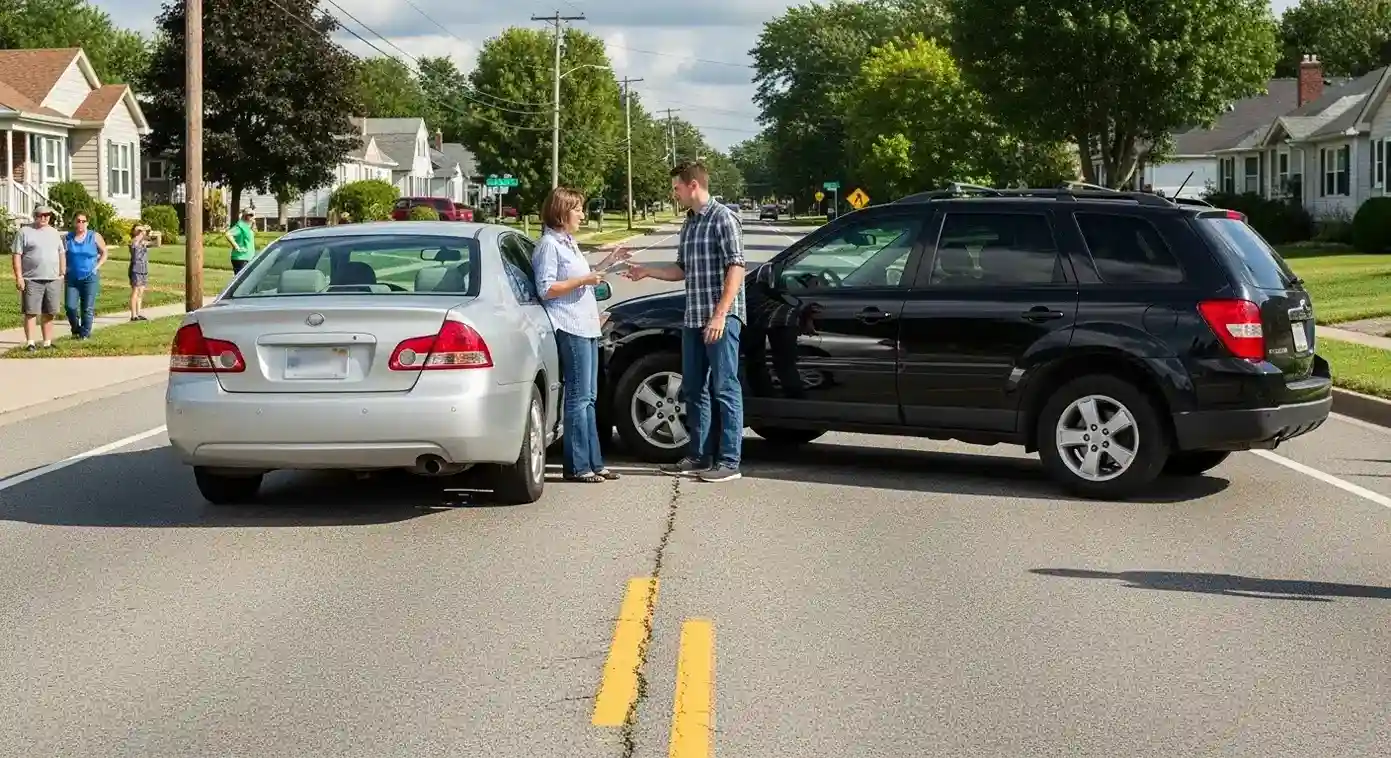
Common Causes of Low Impact Car Accidents in Atlanta
Low impact car accidents can happen for many reasons, often in busy urban environments like Atlanta. Distracted driving is a primary cause, as even inattention in slow traffic can lead to a collision. Other common factors include following another vehicle too closely or dealing with poor road conditions.
These incidents frequently occur in specific locations. You are most likely to experience a low impact crash in parking lots, at stop signs, or during stop-and-go traffic jams. Rear-end collisions are prevalent in these scenarios. Let’s look at some of these situations more closely.
Rear-End Collisions at Low Speeds
Rear-end collisions are one of the most frequent accidents at low speeds. These often happen when traffic suddenly slows or stops, catching the driver behind off guard. Even at a slow pace, a rear-end impact can jolt your body unexpectedly.
The force from the collision can cause your head and neck to snap forward and backward violently, even if your car seat restrains the rest of your body. This abrupt movement is a primary cause of neck pain and whiplash, regardless of how little vehicle damage there is. Interestingly, the force on your neck can be significantly higher than the force on the car itself.
Common causes include:
- Distracted driving in heavy traffic
- Following too closely
- Slippery road conditions are causing a delayed stop
Parking Lot and Traffic Jam Incidents
Parking lots and traffic jams are hotspots for low impact collisions. In parking lots, drivers often maneuver in tight spaces, back out, and deal with pedestrians, which increases the risk of a simple small car accident. You might be backing out of a space while another driver is pulling through, leading to a collision.
Similarly, a traffic jam’s constant stop-and-go nature creates numerous opportunities for a car accident. A moment of distraction is all it takes for a driver to tap the car’s bumper ahead.
While these incidents are often dismissed as minor, they can still result in property damage that requires costly repairs. More importantly, the awkward positions you might be in like turning your head to back up can make you more vulnerable to injury even from a low-speed hit.
Sideswiping accidents in congested traffic
Sideswiping accidents are common in congested traffic, especially on multi-lane roads. These occur when a driver attempts an improper lane change or drifts into an adjacent lane, making contact with the side of another vehicle. Because traffic is often moving slowly, the impact is typically low.
However, even a low impact sideswipe can cause significant vehicle damage, from long scratches and dents to broken mirrors. The jolt from a side impact can also be jarring and may cause injuries, particularly if you are twisted in your seat or unprepared for the collision.
If you’ve been in a sideswiping accident, dealing with the other driver’s insurance can be complicated, especially if they dispute fault. In these situations, consulting a personal injury attorney can help you protect your rights and pursue a claim for your damages.
Potential Injuries From Low Impact Car Accidents
It’s a common misconception that you can’t get hurt in a low impact car accident. The reality is that the risk of injury is very real. The forces involved in a collision, even at low speeds, can be enough to cause a significant car accident injury that may not be immediately apparent.
Insurance companies often challenge injury claims from these accidents, but that doesn’t invalidate your experience. Understanding the common injuries that can result is the first step toward getting the care you need. Let’s examine some of the most frequent low impact car accident injuries.
Whiplash and Neck Injuries
One of the most well-known whiplash injuries results from the sudden back-and-forth movement of the head during a collision. This motion can strain or tear your neck and cervical spine’s soft tissues, muscles, tendons, and ligaments. NHTSA studies the biomechanics of the cervical spine to validate injury claims from low-speed impacts
Why can injuries be serious even if the damage is minor? In a rear-end crash, your body is pushed forward with the car, but your head lags for a moment before snapping forward. This rapid, uncontrolled movement can cause significant strain, leading to neck pain and stiffness.
Common whiplash symptoms include headaches, fatigue, dizziness, and a limited range of motion in your neck. These symptoms might not appear for hours or even days after the accident, so monitoring how you feel is essential.
Soft Tissue Damage and Back Strain
Beyond whiplash, low impact accidents can cause other forms of soft tissue damage and back strain. The force of a collision can compress your spine or cause your back to twist unnaturally, leading to sprains, strains, and significant back pain.
These injuries affect the muscles, ligaments, and tendons that support your spine. If you already have a condition like degenerative disc disease, even a minor jolt can worsen it, leading to chronic pain and the need for extensive medical care.
Symptoms like stiffness, soreness, and radiating pain should never be ignored. Seeking a medical evaluation is crucial to diagnosing the extent of the soft tissue damage. Your doctor may recommend rest, medication, or physical therapy to help you recover.
Concussions and traumatic brain injuries
Can you get a concussion from a fender-bender? Absolutely. A concussion is a mild traumatic brain injury caused by a jolt or blow to the head. Your head may not even strike anything during a car accident to sustain this injury. The rapid head acceleration and deceleration alone can cause your brain to move inside your skull.
This is why the absence of visible damage to your car or body is misleading. You could suffer from concussions with symptoms like headaches, confusion, memory problems, and nausea.
It is especially dangerous for individuals who have had concussions before. If you suspect a head injury after any car accident, seeking immediate medical attention is critical for a proper diagnosis and to prevent further complications.
Psychological effects of low impact car accidents
The effects of a car crash are not always physical. Many accident victims experience significant psychological effects, even from a low impact collision. The shock and stress of the event can lead to emotional distress, anxiety, and even post-traumatic stress disorder (PTSD).
Are there long-term effects you should be aware of? Yes. If the accident causes chronic pain, the daily struggle can lead to depression and a diminished quality of life. You might develop a fear of driving or experience flashbacks of the incident.
These psychological effects are a real part of your damages and should be taken seriously. Your overall well-being needs to address this harm, which may require therapy or other forms of support.
Differences Between Minor and Low Impact Accidents
While we’ve touched on the differences, it’s helpful to see how the terms “minor impact” and “low impact” can affect your car accident case. A low impact accident is an objective description of speed, whereas “minor” is a subjective label often used by insurers to minimize claims. This distinction is crucial when pursuing compensation for your type of damages, as an insurer might argue a “minor” accident couldn’t have caused serious injuries.
Understanding these differences can help you better articulate your situation when filing a claim. Here’s a table to clarify how these terms are often perceived in a car accident case:
| Feature | Low Impact Accident | Minor Impact Accident |
| Definition | Based on low vehicle speed (e.g., under 15 mph). | Subjective term, usually based on minimal property damage. |
| Injury Potential | It can cause serious injuries like whiplash and concussions. | Often argued by insurers to have a low potential for injury. |
| Claim Focus | The focus is on the biomechanical forces affecting the body. | The focus is often on the low cost of vehicle repairs. |
What to Do Immediately After a Low Impact Car Accident
Knowing what to do after a car accident, no matter the severity, can protect your health and your legal rights. A car accident injury can have delayed symptoms even if you feel fine and the damage looks minimal. Your priority should always be transportation safety and well-being.
Taking the right steps from the beginning is key. This includes assessing for injuries, documenting the scene, and knowing when to seek medical attention. A straightforward procedure can make all the difference if you need to file a claim. Here’s what you should do.
Assessing yourself and others for injuries
The very first thing to do is check on yourself and anyone else involved in the accident. Ask if everyone is okay and look for any obvious injuries. However, remember that the shock and adrenaline of a crash can mask pain.
You might feel perfectly fine at the scene but wake up the next day with back pain, a stiff neck, or a sprain, or other whiplash symptoms. Can you still get injured in a low impact car accident? Yes, and these delayed-onset injuries are prevalent.
Because of this, you should never say “I’m fine” at the scene. Instead, state that you are unsure if you are injured and will seek medical attention to be certain. This protects your ability to make future injury claims if pain develops later.
Documenting the scene and exchanging information
Properly documenting the car accident scene is crucial for building legitimate claims with insurance companies. Use your phone to take plenty of pictures and videos from different angles. Capture the property damage to both vehicles, even if it’s just a small dent or scratch.
Also, photograph the surrounding area, including any traffic signs, skid marks, or weather conditions. This evidence can help establish what happened. After documenting, exchange information with the other driver.
Make sure you get the following:
- Name, address, and phone number of the other driver
- Their driver’s license number and insurance company information
- The names and contact information of any witnesses
Reporting the accident to your insurance company
You should report the car accident to your insurance company immediately, even if it seems minor. Your policy likely requires you to report all incidents. When you call, stick to the facts of what happened. Avoid speculating on fault or minimizing your potential injuries.
Be aware that insurance companies are often skeptical of claims from low-speed collisions, especially whiplash claims. The adjuster may try to offer a quick, low settlement to close the case before the full extent of your injuries and medical bills is known.
Do not accept any low impact car accident settlement offer without understanding all your damages. It’s wise to wait until you have a full medical diagnosis before discussing a payout with insurance companies.
Seeking medical attention and documenting any injuries
Seeking medical care after an accident is one of the most important steps. A doctor can identify low impact car accident injuries that you may not be aware of, such as whiplash or a concussion. Why can injuries from low impact crashes be serious? Because internal injuries don’t always show immediate signs.
A medical evaluation creates an official record that links your injuries to the accident. This documentation is essential evidence for your injury claims and is needed to cover your medical expenses. Waiting to see a doctor can allow the insurance company to argue that your injuries were not caused by the accident.
Follow all your doctor’s recommendations for medical treatment. Keep detailed records of all your appointments, prescriptions, and other related costs, as these will be a key part of your claim.
Consulting with a lawyer if necessary
If you have been injured or are facing resistance from the insurance company, consulting with a car accident lawyer is a smart move. There are legal challenges in proving injury from a low impact accident, and a personal injury attorney understands how to overcome them.
A law firm can handle all communications with the insurance company, gather the necessary evidence to support your car accident case, and fight for the full personal injury compensation you deserve. They will ensure your rights are protected throughout the process.
Most reputable lawyers offer a free consultation to discuss your case and assess your options. Since they typically work on a contingency fee basis, you won’t pay any car accident lawyers fees unless they win your case, making legal help accessible when you need it most.
Conclusion
While a low impact car accident may seem minor at first glance, the reality is that these collisions can have lasting physical, emotional, and financial consequences. Injuries like whiplash, back strain, or concussions often don’t appear right away, making it easy to underestimate their seriousness. Insurance companies may use the lack of visible damage to downplay your claim, but that doesn’t diminish the impact on your life. Protecting your health and securing fair compensation requires acting quickly, seeking medical care, documenting your injuries, and understanding your legal options.
At Evans Injury Attorneys, we know how challenging these cases can be, and we are committed to standing up for victims who deserve to be heard. If you’ve been hurt in a low impact accident, don’t wait to get the help you need.
Call us today at (678) 792-0067 or fill out our online form to schedule your free consultation.
Frequently Asked Questions
Can you get compensation for injuries after a low impact accident?
Yes, if another party’s negligence caused the crash, you can file injury claims for medical bills, lost wages, and pain and suffering. A car accident lawyer can help you prove your case and secure a fair settlement.
How do insurance companies handle low impact claims in Atlanta?
Insurance companies treat low impact car accident claims with skepticism. They may try to deny the claim or offer a low settlement, arguing that the collision was too minor to cause injury. They will investigate the case thoroughly before paying out.
Are there legal challenges in proving injury from a low impact crash?
Insurers often dispute legitimate claims by arguing that the physics of the low impact car accident couldn’t cause the injury. A personal injury attorney from an experienced injury law firm can gather the evidence needed to prove your injuries.
How can I determine if I need to file a claim after a low impact accident?
You should file a claim if there is any property damage or if you require medical care. Since injuries can be delayed, it’s wise to report the incident. Accident victims should prioritize their health and document everything to support claim.
Are there any long-term effects of low impact car accidents that I should be aware of?
Yes, a low impact car accident can have long-term effects. These can include chronic pain from whiplash, the worsening of pre-existing conditions like degenerative disc disease, and psychological distress. These effects may require ongoing medical treatment long after the accident occurs.
