


Key Highlights
- A premises liability case occurs when a property owner fails to remedy or warn an injured party of an unsafe condition on their property and the unsafe condition contributes to injury.
- Under Georgia law, to prevail in a premises liability case, a plaintiff must prove four essential elements: duty of care, breach, cause, and damages.
- Some common claims are: slip and fall accidents, negligent security, broken stairs, and dog bite injuries, which happen on residential, commercial, and public properties.
- Promptly collecting and preserving medical, photographic, police report and other evidence can greatly enhance the likelihood of winning a lawsuit.
When you suffer an injury while on someone else’s property, it can be very stressful to deal with the medical bills and lost wages associated with your injury.
Under Georgia premises liability laws, if a property owner’s negligence causes injury to a visitor, then the injured party may be entitled to compensation for their injuries. However, not all injuries are eligible for compensation under Georgia’s premises liability laws. This article will explain how premises liability cases work in Atlanta, as well as who is liable, and what actions you should take following an accident.
If you have been injured due to an unsafe property condition, Evans Injury Attorneys will assess your case and provide you with information about your legal rights.
What Is a Premises Liability Case?
A premises liability case means you were injured due to someone’s unsafe property as a result of that owner’s negligence. A simple way to look at it is: A property owner didn’t keep the building/space safe and that negligence caused you to get hurt.
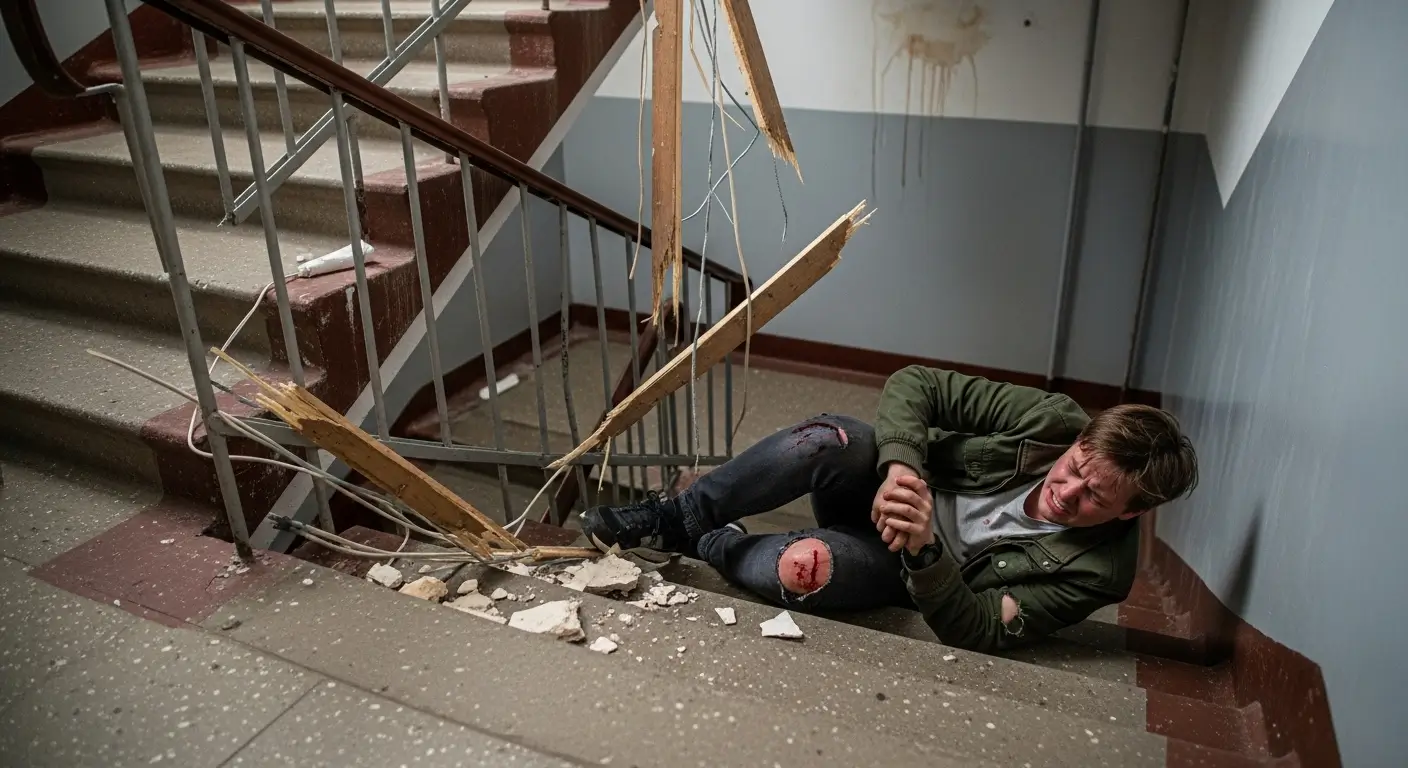
Some examples include slipping on a wet floor at the grocery store in Atlanta, or being hurt when you fell down a stairway with a broken railing in your apartment building.
Premises liability cases usually fit this description:
- Injured on another person’s property
- The injury happened due to a hazardous or unsafe condition
- The owner of the premises didn’t fix or warn visitors of the hazardous condition
- It’s based on negligence.
Note: Not all injuries are automatically due to premises liability; to qualify, the injury must have happened due to a preventable hazard, and the owner of the property must have contributed in part to the cause of the injury.
What Is a Premises Liability Claim?
The premises liability claim is a legal process by which a person who has been injured while on the property of another individual requests compensation for medical expenses, lost earnings, and other types of damages resulting from unsafe conditions on that property.
What happens to a premises liability claim in Atlanta:
- Most premises liability claims begin by notifying the property owner or business of an accident.
- The property owner’s insurance company will conduct an investigation and will typically make a settlement offer for the damages incurred by the person injured.
- Damages in a premises liability claim can include medical expenses, lost wages, and compensation for pain and suffering
“Filing a premises liability claim is often the first step to getting the help you need after an injury. Doing this will give you a chance to recover some losses from either the responsible party or any insurance policies they have in place instead of going to the court.“
What Are the Key Elements of a Premises Liability Case?
Four key elements must be proven in all Georgia premises liability cases: The property owner had a duty of care; the property owner breached this duty of care; the property owner’s breach was the direct cause of the injuries sustained by the plaintiff; and the injured party incurred damages as a result of the accident.
Each element demonstrates that the negligence of a property owner has caused the victim to suffer a premises liability injury.
- Duty of Care: A property owner has a responsibility to maintain a reasonably safe condition for lawful visitors to the property (i.e., a customer, tenant, or guest) as outlined in Georgia Code § 51-3-1.
- Breach: A property owner either created, ignored, or failed to correct an unsafe condition on the property (i.e., a wet floor, broken steps, or loose rail).
- Causation: The unsafe condition caused the accident that caused the injuries to the plaintiff. If the unsafe condition had not existed, the accident would have been prevented.
- Damages: The injured party incurred damages due to the accident (e.g., medical bills, lost income from work, physical and emotional pain, suffering).
How Does a Premises Liability Case Work?
In order to pursue a premises liability claim in the state of Georgia, you must establish that the injury is caused by the property owner as they did not provide a safe premise for individuals.
If the injured person is able to prove that the property owner acted negligently and caused harm, either the property owner or its liability insurance will be responsible for compensating the injured person for expenses incurred as a result of the injury (i.e., medical bills, lost income and/or suffering).
The Process:
- Incident: An injury occurs on a property; for example, he/she slips and falls on a slippery surface or falls down a broken staircase.
- Evidence Collection: Take photos, witness statements, preserve any documents, etc., relating to the accident.
- File Claim: The injured party files a claim with either the property owner or the property owner’s liability insurance.
- Insurance Resolution: The property owner’s insurance company reviews the claim and negotiates with both the injured party and the property owner to resolve the claim without involving the court system.
Lawyer’s Insight:
Before a premises liability lawsuit is ever filed, how you document the accident and how soon you report that information can make a difference in terms of how the insurance company will treat you when it comes time for them to process your claim for damages.
What Makes a Premises Liability Case Different from Other Injury Cases?
Premises liability cases focus on dangerous property conditions rather than intentional or accidental acts like car crashes or assaults.
| Feature | Premises Liability | Other Personal Injury Cases |
| Focus | Dangerous or unsafe property conditions | Direct actions of another person (e.g., car accidents, assaults) |
| Cause of Injury | Negligence in maintaining or warning about hazards | Negligence, recklessness, or intentional acts |
| Timing | Often ongoing hazards (e.g., wet floors, broken stairs) | Usually one-time incidents (e.g., car collision, fight) |
| Prevention | Requires inspections, maintenance, and warning signs | Often depends on others’ behavior in the moment |
| Common Examples | Slips, trips, dog bites, broken handrails | Vehicle crashes, assault injuries, workplace accidents |
Who Can Be Held Responsible in a Premises Liability Case?
Numerous individuals can be held liable in Georgia under premises liability law:
- Property Owners: Property owners are generally liable for maintaining their property in a safe condition to prevent injuries to lawful guests and for repairing any potential sources of injury on the property.
- Business Operators or Tenants: Business operators must ensure that the public/common areas and work areas of their businesses are free from any hazards.
- Property Managers: Property managers who are hired by property owners to maintain their premises may be held responsible for any accidents that occur from the manager’s negligence.
- Maintenance Companies: Contractors such as cleaning, landscaping, and maintenance providers may be liable for any accidents caused by their actions or failures to act.
- Employers: Employers have the legal liability to provide safe working areas for their employees, including entrances, parking lots, and walkways.
- Government Entities: If a government entity fails to provide a safe environment on public property within the city and does not have a maintenance plan in place, then the government may be liable for your injuries if you have been injured on public property.
When Does an Injury Qualify as a Premises Liability Case?
An injury qualifies as a premises liability case when it resulted from a hazard for which the owner of the property knew, or should have known, existed but had not corrected, covered, or warned visitors about.
Existence of a Dangerous Condition
A hazardous condition must exist such as:
- A wet floor and no sign to warn visitors
- Broken or loose steps and handrails
- Uneven sidewalks or floors
- Objects or debris falling
Knowledge of the Hazard: Actual vs. Constructive Notice
Property owners can be held responsible for a hazard if the owner had actual notice or constructive notice of the hazard.
- Actual Notice is the owner’s knowledge of the hazard because they were aware of it (example – the grocery store owner/manager saw spilled liquid on the floor of their store).
- Constructive Notice is where the hazard may have existed long enough to be discovered through reasonable inspection by the property owner (example – dried footprints on the floor of a store, frayed edges of a stair).
Failure to Repair or Warn
The owner’s failure to repair or warn about a hazardous condition results in liability.
- No signs indicating wet floors
- No repairs made for broken stairs or handrails
- Maintenance problems ignored
Direct Link Between Hazard and Injury
An Injury must occur from a direct relationship to the hazard. Example: tripping on a broken stair and spraining your ankle.
Does Visitor Status Affect a Premises Liability Case?
Yes, property owners owe a duty of care to visitors based on their status as an invitee, licensee, or trespasser as recognized under Georgia Code § 50-7-116. The visitor’s status determines how much protection they are owed under Georgia premises liability law.
Invitees
An invitee is a customer, tenant, or lawful guest who enters another person’s property for business or personal purposes. Invited guests are owed the highest level of care, which includes inspecting and maintaining the property for any known hazards, as well as providing adequate warnings about those hazards.
Licensees
Licensees Are Visitors Who Enter Someone Else’s Property For Their Own Benefit; They Licensees are visitors who enter someone else’s property for their own benefit; they usually enter property for social reasons or to sell something to the owner. Licensees are owed a moderate amount of care by the owner of the property where they are visiting.
Trespassers
There is minimal duty to protect trespassers because trespassers enter properties without the owner’s knowledge, and the owner is obligated to protect trespassers only from willful or intentional harm.
What Are Common Premise Liability Claims?
Common premises liability claims arise because of various hazards, such as food spills, inadequate security, unsafe property conditions, and animal attacks. Most premises liability cases occur on commercial or residential properties or at public spaces.
Here are some premises liability case examples:
- Slip/fall/trip incidents due to wet surfaces, uneven surfaces, or unstable flooring
- Ineffective security measures resulting in attacks and robberies at an apartment complex or parking area
- Animal attack/bite from lack of restraint or an aggressive animal
- Unstable structures like collapsed steps, dropped items, etc. or improper guard rails
- Faulty elevators or escalators due to poor maintenance or faults
- Construction zone hazards resulting from unsecured equipment or lack of adequate safety precautions
- Pool and recreational injuries resulting from no barriers or insufficient supervision
- Ice, snow, and other weather hazards that were not cleared or treated appropriately.
How Does Comparative Negligence Work in Georgia?
Under Georgia’s comparative negligence law, the amount you can recover will decrease to the extent that you were at fault; therefore, if you were less than 50% at fault for the incident, you can still recover damages. For example, if you were found to be 10% responsible for an accident, your total damages would be decreased by 10%.
Many property owners and insurance adjusters will use the term “open and obvious” as a way to increase the blame you share for your injuries, even when there are still dangerous conditions present. Because the percentage of fault is determinative in affecting how much money you can receive, speaking to a professional lawyer can assist you with protecting your rights and minimizing an unfairly high percentage of fault.
What Should You Do After Being Injured on Someone Else’s Property?
Taking steps right away after suffering an injury helps you maintain your health and build a stronger potential premises liability claim against that property owner. Also, taking these steps helps preserve evidence so that it can be used later in court, and prevents any disputes later.
Seek Medical Attention Immediately
Getting medical help immediately is very important, even if your injury appears minor at first. Receiving prompt treatment protects your health and provides a link from the time of the accident to now through the creation of your medical records documenting your injury.
Report the Incident
Contact the property management, business owner, or landlord as soon as possible. Always get an incident report so there is an official record of the accident.
Take Photos of the Hazard
Take pictures of the dangerous situation before it is repaired or eliminated. Take pictures from multiple angles, at different times of day and of the absence of warning signs.
Collect Witness Information
Get the names and phone numbers of anyone who witnessed the accident or knows about the dangerous situation before you leave the area. Witness testimony will help support your version of events.
Preserve Receipts and Documents
Keep secure all records of your medical documentation which includes bills, prescriptions, repair invoices, and missing work records. These records will help when calculating damages and other financial losses associated with your injury.
Avoid Recorded Statements to Insurers
Unless you have spoken with a lawyer, do not provide a recorded statement to an insurance company. Insurance companies will use what you have to say to attempt to shift blame away from them or reduce the amount of compensation you may be entitled to receive.
Next Steps After a Property-Related Injury
If you were injured due to unsafe conditions on someone else’s property in Atlanta, Georgia, you could have a valid premises liability case. We, as lawyers, will provide solid proof that the owner neglected to provide you with a duty of care and breached that duty, which caused you to get hurt.
Our team will help you understand how negligence, evidence, and your visitor status affect the claim, and this can help you make informed decisions about your next steps. By taking action early, you protect your rights and improve your chances of a fair outcome.
Contact Evans Injury Attorneys at (678) 792-0067 to review your claim today.
Frequently Asked Questions – Premises Liability Case
What Evidence Is Used to Prove a Premises Liability Case?
Photographs, videographic evidence, recordings from security cameras, testimonies from witnesses and medical documents, digital files, and statements from an expert witness are common types of evidence.
Do I Need a Lawyer for My Premises Liability Case?
Having legal advice is essential in Georgia. An attorney preserves evidence for an individual, negotiates with the at-fault insurer, identifies coverage available (such as Med Pay), and ensures that they are fully compensated with the least amount of liability on their client’s part.
What is Premises Liability Insurance?
Premises liability insurance protects property owners from liability should someone be injured on their property as explained by U.S. Small Business Administration. The insurance will assist in paying for medical care, legal costs, and compensatory damages.
What is Premises Liability Law?
Premises Liability Law states that property owners are liable for injuries that occur to others resulting from unsafe property conditions. The Law outlines the duty of care, negligence and compensation standards for injured people.
What is Premises Liability Coverage?
Premises liability coverage protects against claims arising from injuries to visitors. It pays for any incurred medical expenses and any legal fees incurred due to claims or lawsuits.
How Long Does It Take to Settle a Premises Liability Case?
The time depends on factors such as the severity of the injury, the evidence involved in the case, and the negotiations between the insurer and the claimant. Simple cases typically settle within a few months, while more serious claims may take longer than one year.
Are Premises Liability Cases Hard to Win?
Winning a claim in a premises liability case requires the injured party to prove negligence. Many premises liability cases in Georgia can be successfully resolved with the proper evidence, documentation and legal representation.
